

Biology Has Already Replaced Your Supply Chain
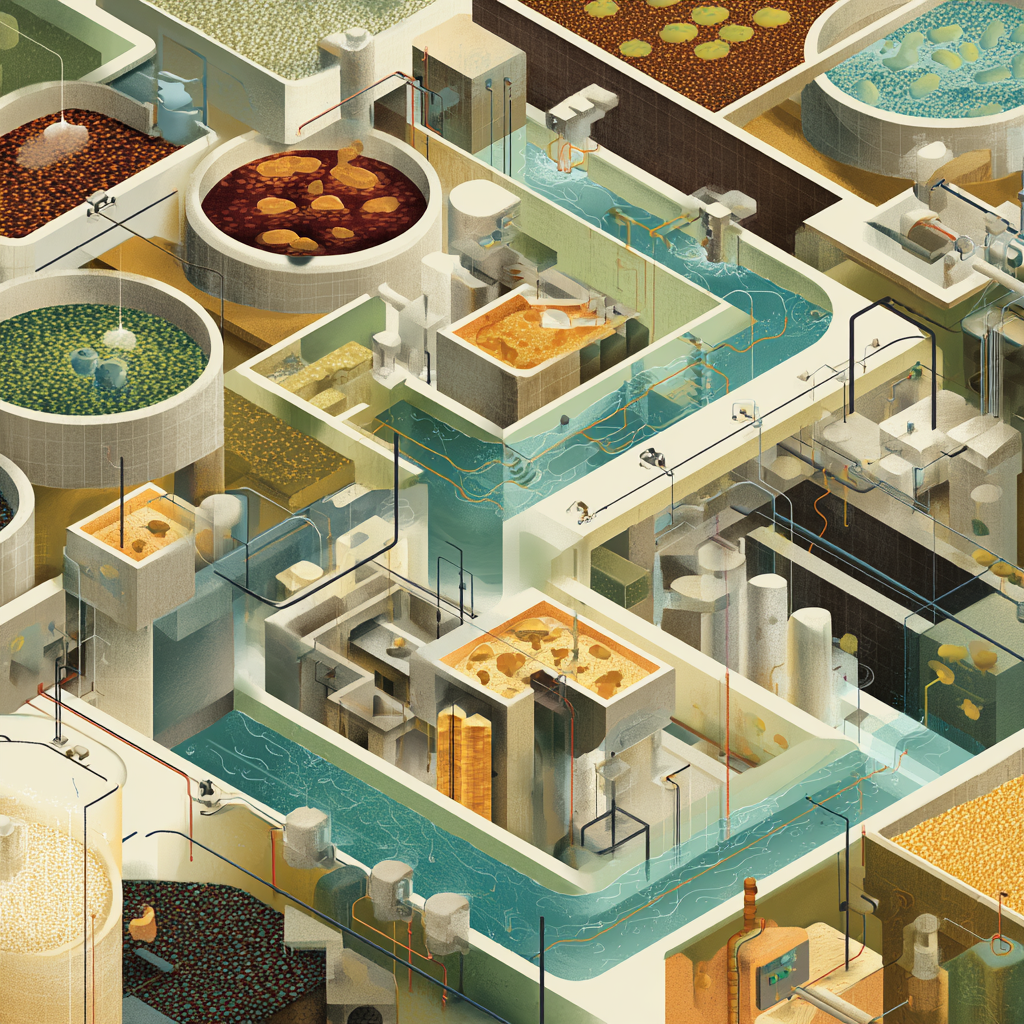
TL;DR The era of global supply chains built on cheap labor and fossil fuels is ending. Biology is the only technology that lets you manufacture the same inputs in multiple regions without rebuilding from scratch. The companies making that bet now will define the next decade of consumer products. This is a preview of the playbook.
In February 2026, the Strait of Hormuz closed.
And while it has opened and closed and opened again, the world's largest container carriers have started diverting cargo. Hapag-Lloyd, Maersk, and MSC have all started routing containers 800 miles across Saudi Arabia, feeding them onto smaller vessels to reach Dubai and Abu Dhabi. An 800-mile landbridge to bypass a 21-mile strait [1]. The cost is not just measured in fuel and time; it is measured in the carbon emissions and operational complexity that every sustainability officer and CFO now has to explain to a board that assumed ocean freight was a solved problem.
This is not a supply chain optimization. It is an admission that the old geometry no longer computes.
This was not a black swan. We saw the same architecture fail in 2025.
The US imposed 145% tariffs on alternative sweeteners from China. Stevia, monkfruit, erythritol—ingredients baked into thousands of CPG formulations—became economically unviable at their primary source overnight [2]. The tariffs were later lifted, but the vulnerability they exposed was permanent. When your ingredient strategy depends on a single geography and a stable trade regime, you are not sourcing. You are speculating on diplomacy.
The supply chains that built modern consumer products were designed for a world that no longer exists: cheap energy, stable trade lanes, predictable shipping, and the assumption that you could always manufacture where labor was cheapest and ship to where margins were highest. That world is not experiencing temporary turbulence. It is being repriced out of existence.
The question is not whether the old model breaks. It is already breaking.
The question is what replaces it.
Biology is the only manufacturing technology that lets you produce the same molecule, the same material, the same ingredient in multiple regions without rebuilding the factory from scratch.
A fermenter in Rotterdam can run the same protocol as a fermenter in Singapore. The feedstock is locally sourced sugar, not globally shipped petroleum.
This is not a sustainability narrative. It is a redundancy strategy.
The companies making this bet now, converting petrochemical inputs to bio-based equivalents, regionalizing fermentation capacity, treating biology as infrastructure rather than R&D, will define the next decade of consumer products. They will do so not because they predicted the Hormuz closure or the next tariff cycle, but because they stopped assuming that stability is the baseline.
The localization of manufacturing via biology.
Biologizing is not biotech. It is not sustainability. It is not R&D.
It is the localization of manufacturing through biology.
Same molecule. Multiple regions. No petroleum dependency. No single chokepoint that can freeze your supply chain overnight.
Instead of extracting a chemical from crude oil in a centralized refinery and shipping it across oceans, you engineer a microorganism to produce that chemical in a fermentation facility wherever you need it. The organism runs on locally available feedstock: sugar, agricultural waste, methane, CO2. The output is identical. The supply chain is not.
This is not invention. It is recognition.
Biology has been manufacturing at ambient temperature, at local scale, from local inputs, for 3.8 billion years. Every cell in your body is a factory that runs on what you ate for breakfast. We did not discover a new capability. We learned to borrow one that predates us by eons.
The proof of concept is already here.
Mango Materials takes methane, a waste gas that would otherwise be flared, and feeds it to bacteria that convert it into PHA, a biodegradable plastic. The input is pollution. The output is packaging. Polybion takes fruit waste from juice production and grows bacterial cellulose, a material that replaces animal leather. The input is what a factory throws away. The output is what a luxury brand shelves.
Neither company built new infrastructure. They found feedstock that someone else was paying to dispose of and turned it into value.
That is biologizing.
Not a better version of the old supply chain. A different supply chain entirely. One that runs on biology instead of petroleum, scales regionally instead of centrally, and treats waste streams as feedstock rather than cost centers.
The tools already exist. The molecules are already growing.
The biology works. The org chart doesn't.
The biology is not the problem.
Inside many CPG companies, biologizing touches three departments that do not effectively speak to each other. R&D runs science projects: small-scale fermentation trials, proof-of-concept studies that live in a lab and die in a PowerPoint. Sustainability writes reports: carbon targets, ESG disclosures, commitments that read well in an annual report but have no procurement mechanism attached. Procurement manages risk: negotiating with existing suppliers, hedging price volatility, optimizing a supply chain built for petrochemicals.
Each group is doing its job. None of them is biologizing.
R&D finds the technology or the molecule but doesn't always have a line of sight to a supplier who can make it at scale. Sustainability sets a target but has no mechanism to source the bio-based alternative. Procurement has the buying power but no mandate to change what it buys.
The molecule exists. The target exists. The budget exists.
They exist in different rooms, on different timelines, reporting to different executives.
Meanwhile, the biotech startups that actually have the molecules cannot get a meeting with the right person because the right person does not exist. They speak in fermentation yields and titers. Procurement speaks in landed cost per kilo and minimum order quantities. The language gap is as wide as the organizational one.
Brands will not commit until they see fully scaled solutions. Not just promising molecules. Not just promising targets. Orchestrated supply chains.
This is not a science gap. It is an orchestration gap.
Three conversations need to happen in the same room. Who is building what. Who needs it. Who has the money to make it work. Most companies are missing the person who can run all three simultaneously.
The companies that will win this transition are not the ones with the best R&D or the most ambitious sustainability targets. They are the ones that connect the rooms.
Three things every biologizing program needs. In parallel.
Connecting the rooms is not a metaphor. It is a scope of work.
Any serious biologizing program needs three things. Not sequentially. In parallel.
1. A board-ready narrative. The CFO does not care about fermentation. The board does not care about titers. They care about margin protection, supply chain resilience, and regulatory exposure. If biologizing cannot be explained in those terms, it will never leave R&D.
The narrative has to answer three questions before anyone asks them: Why now? Why biology specifically? What does it cost to wait? If those three questions do not have clear, defensible answers, the program dies in the first budget cycle.
This means translating the transition into language the boardroom already uses. Not "we're exploring bio-based alternatives." That sounds like a science project. Instead: "We are reducing single-source dependency on petrochemical inputs by qualifying regionally manufactured bio-based equivalents at cost parity or better."
One sentence. Procurement logic. CFO logic. Board logic.
The narrative is not a communications exercise. It is the difference between a funded program and a pilot that gets cut in the next budget cycle.
2. A written molecule strategy. The companies that succeed at biologizing do not start with biology. They start with molecules.
Which specific ingredients in your supply chain are most exposed to petrochemical dependency, geopolitical concentration, or climate volatility? Which of those have credible bio-based pathways today. Not in five years—today? Which regions have the feedstock and the manufacturing infrastructure to produce them?
This is not a sustainability roadmap. It is a sourcing strategy with biology as the variable. It maps priority molecules to regional manufacturing options, identifies the partnership gaps, and sequences the transition so procurement can act on it. Not in three years, but in the next sourcing cycle.
Most companies skip this step. They run a pilot, publish a press release, and call it progress.
A pilot without a strategy is tourism.
3. Named partnerships with terms procurement can move on. This is where most biologizing efforts die. The strategy identifies the molecules. The narrative secures the budget. But nobody has a relationship with the company that can actually supply the bio-based equivalent at the volume and price point procurement requires.
The biotech ecosystem is not organized for enterprise sales. The founders who can make your molecule are running Series A companies with twelve-person teams. They do not have key account managers. They do not have RFP response teams. They have fermenters and a pitch deck.
Someone has to bridge that gap, make the warm introduction, translate between the languages, and get both parties to a term sheet that procurement will not reject on sight. Binding offtake agreements. Co-development structures. "We buy if..." commitments that give the innovator the demand signal they need to justify the scale investment.
Not a partnership announcement. Not an MOU. Named suppliers, qualified molecules, and commercial terms.
This is the orchestration layer. It is currently the most underfunded, most undervalued part of the biologizing transition. And it is the difference between a program that delivers in three years and one that is still in pilot in seven.
The narrative, the strategy, the partnerships. Without all three, biologizing remains what it is at most companies today: a good intention trapped in the wrong org chart.
The early movers are making quiet progress. They're serious.
The early movers are quiet about it. Competitive advantage in supply chain transitions does not announce itself. That is how you know they are serious.
What is visible: Samsara Eco aligned university research, retail offtake, and institutional capital on day one and moved from lab to Lululemon in four years. Better Meat Co. embedded its ingredient into Hormel's supply chain before seeking scale capital, proving demand, then built [3]. The pattern in both cases was the same: ecosystem first, infrastructure second.
The Advanced Biotech for Sustainability coalition has already identified the specific molecules that unlock regional supply chains and put a number on it: $1 trillion in biotech impact over the next fourteen years.
We are aware of consumer products companies, some with revenues exceeding $500 million, that have moved past pilots and into structured biologizing programs. They are mapping molecules, qualifying regional bio-based suppliers, and negotiating the offtake agreements that turn intention into inventory. We cannot name them. They have not asked us to. The competitive advantage of being early is only an advantage if your competitors do not know you are moving.
What these companies share is not a particular technology or a favorite organism. It is a decision. They decided that waiting for the supply chain to stabilize is more expensive than rebuilding it around biology. They decided that the orchestration gap is not someone else's problem to solve. And they decided to start before they had perfect information. Because perfect information is a luxury that the current geopolitical environment no longer provides.
The window for quiet moves is narrowing.
China controls 70% of global biofermentation capacity and is building 43 new pilot plants by 2027 [4]. The companies establishing bio-based supply chains now are not doing it for sustainability reports. They are doing it because dependence on a supply chain that has already broken twice in three years is no longer acceptable to their boards.
You already know if this is for you.
If you are the Chief Innovation Officer or Chief Supply Chain Officer and have an informal or explicit mandate to reduce petrochemical dependency. Your sustainability team is excellent at reporting. Your procurement team is excellent at negotiating. Neither of them can tell you which bio-based supplier to call, what the offtake terms look like, or how to build a board presentation that survives a CFO's pushback.
If you are the supply chain director who searched "bio-based alternatives to petrochemical ingredients" at 10pm on a Tuesday because your CFO asked a question in the quarterly review that nobody in the room could answer. If you have been in the same meeting four times this year. The agenda item changes. The question underneath it doesn't: How do we reduce our dependency without destroying our margins, our timelines, or the board's confidence?
If you are the founder of a Series B biotech company with a molecule that works, a fermenter that runs, but no way to get in front of the CPG company that needs what you make. You have been told to "build relationships" with brands. Nobody told you that the person you need to talk to does not have a title that matches what you are selling.
You are all sitting on different sides of the same gap.
You have read the articles. You have attended the panels. You have come away with excitement and no architecture.
The transition to biology does not fail because the biology doesn't work. It fails because the people who have the molecules, the people who need them, and the people who fund the transition are not in the same room, do not speak the same language, and do not have a shared framework for making decisions.
The next decade of consumer products will be built by the people who orchestrate this transition. There aren't many of us thinking about it this way yet. The ones who are tend to find each other useful.
Supply chains built for stability are being repriced by a world that no longer offers it. Biology is how the next ones get built.
FOOTNOTES
World’s Largest Container Carrier Plans Route Avoiding Hormuz. Bloomberg, May 2, 2026.
The Stealth Cost Creeps Killing Your Margins. Vividly. May 5, 2025.
Meat the Future: How Paul Shapiro is Brewing Superfoods at Better Meat Co. Grow Everything Podcast. 2024
China releases list of 43 companies to build biomanufacturing pilot plants. Bio Brawl. Nov 19, 2025. Highly recomment Bio Brawl to anyone who wants to track China’s biotech industry.